Quick Summary
Discover how portable mini projectors enhance your home entertainment and travel experiences, with insights on selection, benefits, and practical considerations.

Magcubic 8k Wifi6 Projector 290ansi Android 14 Dual Wifi All

Magcubic Hy300 Pro+ 4k Android 11 Portable Projector 8000 Lu

Magcubic Hy300 Pro+ 4k Android 11 Portable Projector 8000 Lu

Magcubic 8k Hy300 Pro + Projector Built In 5w Speaker 1280*7
The Big Picture, Pocket-Sized: Your Guide to Mini Projectors That Set You Free
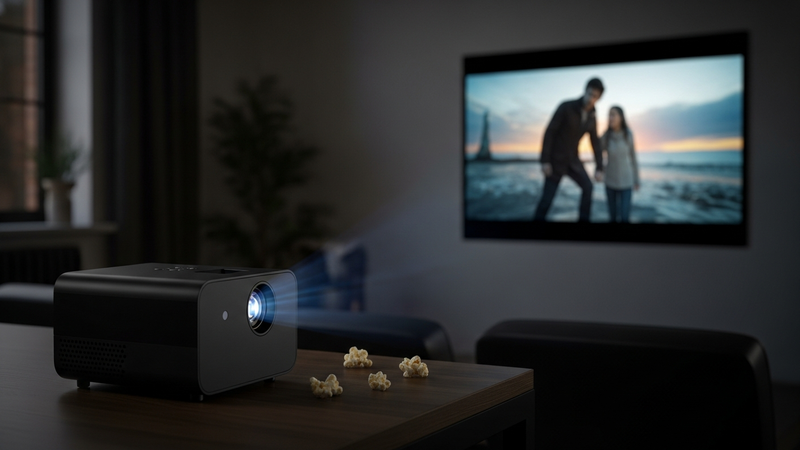
I remember the moment my living room disappeared. A friend pulled a small, unassuming box from his backpack, aimed it at a bare wall, and within minutes, we weren't on a sofa anymore. We were in the rolling hills of Middle-earth, the image vast and enveloping. That was my first encounter with a portable mini projector, and it shattered every assumption I had about what home entertainment could be.
That magic is no longer a secret. A quiet revolution is unfolding in backyards, bedrooms, and hotel rooms everywhere. We’re all craving flexibility—in how we work, how we travel, and how we unwind. The humble mini projector answers that call, packing astonishing brightness, crisp resolution, and serious battery life into packages that slip into a backpack. This isn't just about watching movies; it's about transforming any flat surface into a portal. Consider this your friendly, no-jargon guide to finding the right one for you.
Liberation from the Glowing Rectangle: Why Your Next Screen is Space Itself
Our world is made of fixed, glowing rectangles. The portable projector offers a radical idea: what if the screen was anywhere? The size is limited only by your wall, and the location changes on a whim.
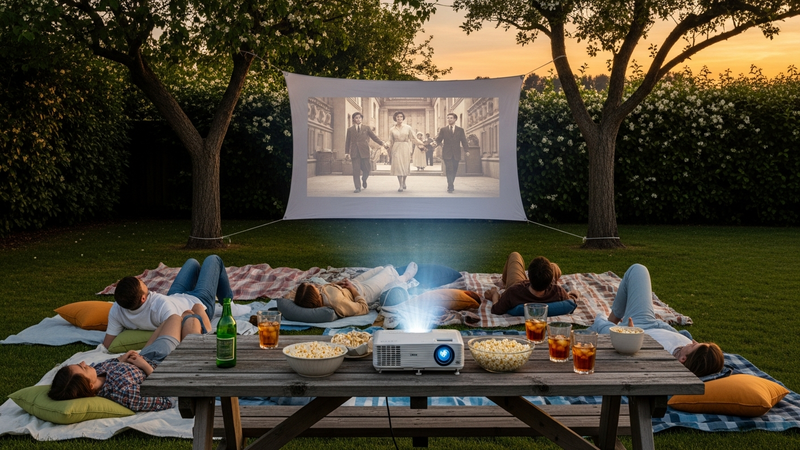
The appeal is deeply human. It’s communal, pulling people together around a shared, large-scale experience. It’s flexible, turning a blank wall into a gaming arena, a presentation surface, or a tent's ceiling into a personal planetarium. For the remote worker, it’s a giant, easy-on-the-eyes monitor. For the traveler, it’s a piece of home that weighs less than a pair of shoes. This is made possible by a technological leap—advanced LEDs and efficient imaging chips have democratized what was once bulky and expensive.
Cutting Through the Spec-Sheet Nonsense: What Actually Matters
Projector marketing is a minefield of inflated numbers. Let’s translate the key terms into plain English, so you know what you’re really buying.
The Image Holy Trinity: Brightness, Resolution, Contrast
These three work together. Sacrifice one, and the experience suffers.
1. Brightness (ANSI Lumens): Your Battle Against Light This is critical. It determines if your image looks vibrant or gets washed out by a lamp.
- Ignore “LED Lumens.” Look for ANSI Lumens, the standardized metric. It’s honest.
- The Real-World Guide:
- 50-200 ANSI: For pitch-black rooms only. Perfect for a bedroom ceiling.
- 200-500 ANSI: The sweet spot. Great for a controlled living room at night.
- 500+ ANSI: Excellent. Can handle some ambient light for larger, more versatile images.
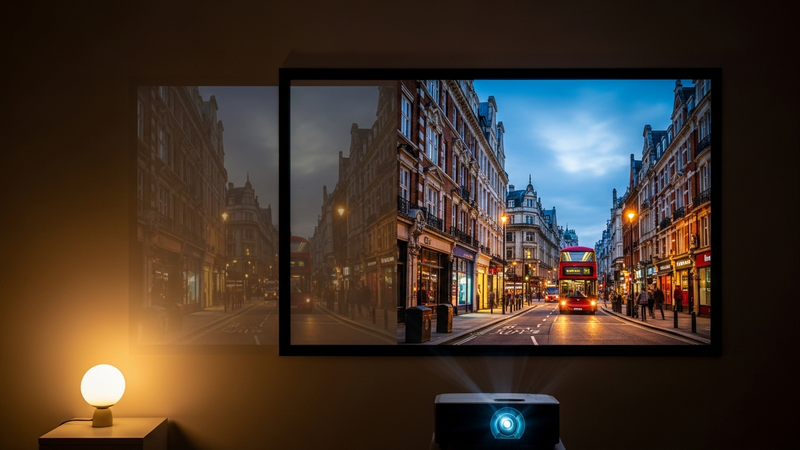
2. Resolution: The Clarity Factor More pixels mean a sharper, more immersive picture with less visible pixelation.
- Native vs. Supported is KEY. Native resolution is the projector’s actual physical pixels. Supported resolution just means it can accept a higher-quality signal and downscale it. Always prioritize native resolution.
- The Hierarchy:
- 854x480 (480p): Entry-level. Fine for casual, small-scale use.
- 1280x720 (720p/HD): The recommended starting point for a good balance.
- 1920x1080 (1080p/Full HD): The current gold standard. For a beautifully sharp, cinematic feel, a model like the Magcubic Native 1080p L018 is a standout choice.
- 4K: Premium. True native 4K is rare in minis, but some, like the Magcubic Hy300 Pro+, accept 4K input for future-proofing.
3. Contrast Ratio: The Depth & Pop This is the difference between the brightest white and darkest black. High contrast means deeper blacks, more shadow detail, and an image that feels three-dimensional. In a dark room, contrast is king for movie night.
The "Make It Work" Features: Connectivity, Sound, and Power
The picture is only half the story. How you connect and listen completes it.
Connectivity is Your Content Pipeline: You want an HDMI port for laptops and streaming sticks, a USB port for media files and powering those sticks, and built-in Wi-Fi/Bluetooth for screen mirroring and audio. Modern projectors like the Magcubic 8k Wifi6 Android 14 are built as all-in-one media hubs.
Audio: The Universal Compromise Here’s the truth: speakers in a soda-can-sized device are mediocre. They’re often tinny. The solution? Budget for an audio upgrade. Use the Bluetooth to connect to a portable speaker, or use a 3.5mm audio-out jack if available.
Battery Life: Read Between the Lines True portability means freedom from outlets. Manufacturer ratings are for ideal conditions (low brightness, eco mode). Real-world movie watching often cuts that number by 30-50%. Look for a rated life of 3+ hours to comfortably finish a film.
From Box to Big Screen: Your First Setup Made Simple
You’ve got your projector. Here’s how to avoid the “meh” and get to the “wow.”
Placement & Image Size: The Throw Ratio
Every projector has a throw ratio (e.g., 1.2:1). It means for every 1.2 feet from the wall, you get 1 foot of image width. To get a 100-inch wide image with that ratio, place the projector about 10 feet back.
- Keystone Correction is Your Best Friend: Your projector won’t be perfectly aligned. Use digital keystone correction in the menu to square the image. Use it sparingly, as it can soften the picture. Auto keystone, found on models like the Transpeed Android 11 projector, is a nicer, automatic solution.
The Screen Question: Wall vs. Upgrade
Your wall is free, but it has texture and color that can dull the image. A simple, portable pull-down screen or a taut white sheet dramatically improves contrast and color vibrancy.
The Smartest Accessory: A Streaming Stick
The single best tip? Plug a Roku Express or Amazon Fire Stick into the HDMI port. It instantly gives your projector a slick, familiar smart-TV interface for Netflix, Disney+, and more, turning devices like the Magcubic Projector Android14 8k into a seamless entertainment center.
The Honest Truth: Why You’ll Love It (And What You’ll Miss)
After living with these, the trade-offs are clear. The promise is incredible, but it’s good to go in with eyes open.
The Empowering Pros:
- True Portability: The core appeal. Your theater fits in a bag.
- Stunning Simplicity: Power on, connect, and you’re projecting in under a minute.
- Space Liberator: In small spaces, it eliminates the need for a permanent TV.
- Wild Versatility: It’s a cinema, gaming monitor, presentation tool, and digital art projector in one.
The Pragmatic Cons:
- The Brightness Ceiling: Even the best mini projectors demand some light control. They can’t fight a sunny afternoon.
- Audio is an Afterthought: Planning for an external speaker isn’t a suggestion—it’s a necessity.
- Battery Life Realities: For a long outdoor night, a portable power bank is a wise sidekick.
- Feature Trade-offs: You often sacrifice pro-level calibration controls and whisper-quiet fans for size and price.
Beyond Movie Night: Unleash Your Creativity
This is a tool for creation, not just consumption.
- Ambient Magic: Project a slow-moving galaxy or a crackling fire onto your wall for instant atmosphere.
- Giant Gaming: Connect a Nintendo Switch for a larger-than-life adventure (look for a ‘Game Mode’ to reduce lag).
- The Ultimate Tracing Tool: Project patterns, fonts, or drawings onto canvas or wood for perfect DIY projects.
- Impromptu Presentations: In your bag, it guarantees you can present on a big screen anywhere.
Is a Mini Projector Right for You?
The portable mini projector is a mature, transformative piece of tech. It won’t replace your 4K OLED TV for bright Sunday sports. But it will do something your TV never can: escape the stand and fill your world with light and imagination.
If you value flexibility, cherish shared experiences, live in a small space, or simply love the idea of a cinema in your backpack, the answer is yes. The technology is here, and it’s more accessible than ever. Your canvas—be it a wall, a sheet, or the side of a tent—awaits.
Ready to choose? Based on our guide and current top performers, here are five models that excel in key areas for beginners:
- For the Balanced Beginner: Magcubic 8k Wifi6 Android 14 Projector. With 290 ANSI lumens, 720p native resolution, and the latest Android TV built-in, it’s a fantastic all-in-one starting point that won’t overwhelm.
- For the Budget-Conscious Big-Image Seeker: Magcubic Hy300 Pro+. Offering 4K input support at a remarkably low price, it’s for those who want future-proof connectivity and a large image for movies on a tight budget.
- For the Picture Quality Purist: Magcubic Native 1080p L018 Projector. With 650 ANSI lumens and true 1080p resolution, this is the pick if your top priority is a sharp, bright, cinematic image in a dark room.
- For the Simple Streamer: Transpeed Android 11 Projector. A reliable, straightforward option with smart TV features built in, perfect for someone who just wants to plug in, connect to Wi-Fi, and start watching.
- For the Tech-Forward User: Magcubic Projector Android14 8k. Featuring the latest Android OS and strong connectivity, this model is for the user who wants their gadget to feel current and versatile for years to come.
Magcubic 8k Wifi6 Projector 290ansi Android 14 Dual Wifi All
Magcubic Hy300 Pro+ 4k Android 11 Portable Projector 8000 Lu
Magcubic Hy300 Pro+ 4k Android 11 Portable Projector 8000 Lu
Magcubic 8k Hy300 Pro + Projector Built In 5w Speaker 1280*7
What we liked
- Exceptional portability for on-the-go use
- Easy setup and compatibility with various devices
- Compact design ideal for small spaces
- Versatile applications for movies, presentations, and more
What could be better
- Often lower brightness compared to larger projectors
- Limited built-in battery life on many models
- Reduced feature sets like lack of 4K support
- Potential need for external audio for better sound quality
Gallery
Top Picks For You
We've curated these high-rated options matching Mini Projectors Unveiled: The Essential Guide for Home Theater and Travel based on quality and value.
Magcubic 8k Wifi6 Projector 290ansi Android 14 Dual Wifi All
Magcubic Hy300 Pro+ 4k Android 11 Portable Projector 8000 Lu
Magcubic Hy300 Pro+ 4k Android 11 Portable Projector 8000 Lu
Magcubic 8k Hy300 Pro + Projector Built In 5w Speaker 1280*7
Level Up Your Shopping Game
Join 17,920+ smart shoppers who get our exclusive guides and honest reviews delivered weekly.
No spam ever. Unsubscribe with one click.
In this Article
Reading time: approx. 9 min
Related Topics